Safety doesn’t start with policy documents buried in a folder—it starts with conversation. Tool box talks are short, focused safety discussions held at the job site, typically lasting 5 to 15 minutes. They address real-time hazards, reinforce protocols, and keep safety top of mind. But crafting a new talk every week is time-consuming. That’s where a reliable tool box talks download can make all the difference.
Professionals across construction, manufacturing, utilities, and oil & gas rely on downloadable templates to streamline their safety programs. The right resource saves hours, ensures compliance, and improves engagement. But not all downloads are created equal. Many are generic, outdated, or poorly structured—leading to disengaged crews and missed risks.
This guide cuts through the noise. You’ll find actionable templates, proven sources for tool box talks download, and real-world integration strategies that transform routine talks into impactful safety moments.
Why Downloadable Tool Box Talks Work
A well-designed tool box talk template does more than fill a meeting agenda—it structures communication, aligns teams, and reduces incident rates. Consider this: OSHA estimates that effective safety training can reduce workplace injuries by up to 60%. Yet, many supervisors wing it, relying on memory or informal chats.
Downloadable talks bridge the gap between compliance and consistency. When you use a structured template, you ensure:
- Consistency: Every crew receives the same key messages.
- Regulatory alignment: Content reflects OSHA, ANSI, or other local standards.
- Time savings: No need to research topics from scratch.
- Documentation: Easy sign-in sheets and recordkeeping for audits.
But here’s the catch: a downloaded talk only works if it fits your context. A generic “slip, trip, and fall” talk might miss specific site hazards like uneven trench edges or wet steel decking. The best downloads allow customization—so you can adapt the content, not just read it aloud.
Where to Find Quality Tool Box Talks Download
Not all free templates are worth your time. Many are poorly formatted, lack engagement elements, or are outdated. Focus on sources that offer professionally designed, regularly updated, and easily customizable content.
Here are five trusted sources for tool box talks download:
1. OSHA.gov The U.S. Occupational Safety and Health Administration offers free, no-frills safety talks aligned with federal regulations. While the language is formal, the content is gold-standard for compliance.
- Best for: Government contractors, compliance officers
- Pros: 100% accurate, legally sound
- Cons: Minimal visuals, not audience-friendly
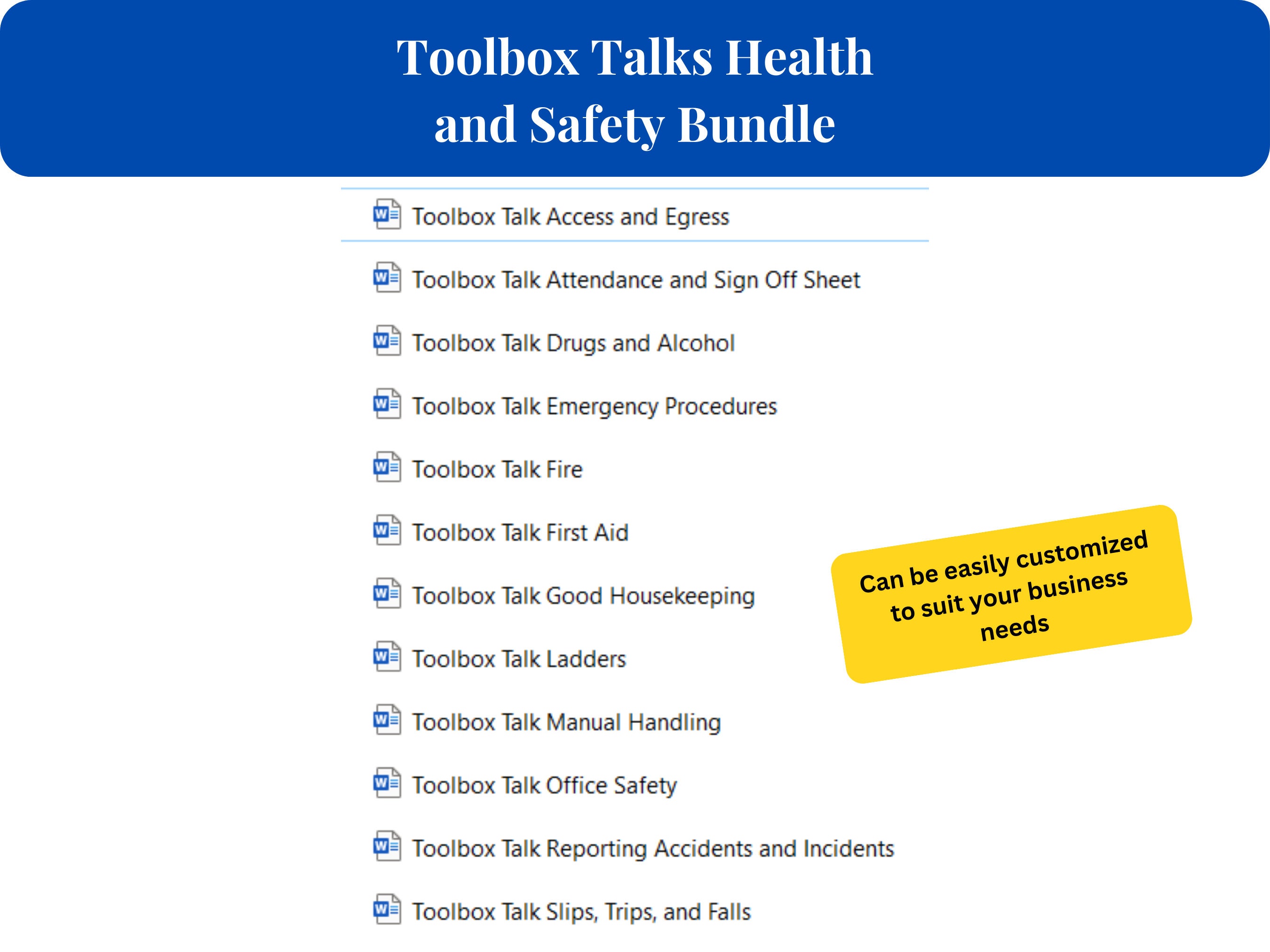
2. SafetyCulture (iAuditor) SafetyCulture hosts a large library of editable toolbox talk templates. Their tool box talks download section includes PDFs, Word docs, and digital forms you can complete on mobile devices.
- Best for: Teams using digital checklists
- Pros: Mobile-friendly, customizable, includes sign-off sheets
- Cons: Some advanced features require a paid plan
3. Creative Safety Supply
This supplier offers free, visually engaging tool box talks in multiple formats. Topics range from PPE to forklift safety, with clear graphics and discussion prompts.
- Best for: Visual learners, manufacturing teams
- Pros: Clean design, includes training certificates
- Cons: Light on industry-specific depth
4. HSSE World A go-to for oil & gas, construction, and heavy industry. HSSE World provides bilingual (English/Spanish) tool box talks and downloadable PowerPoint versions.
- Best for: Multilingual crews, high-risk industries
- Pros: Industry-specific, includes hazard illustrations
- Cons: Registration required for full access
5. Workhub Workhub offers a free template library with downloadable talks, attendance sheets, and even animated videos. Their content is designed for quick delivery and high retention.
- Best for: Fast-paced environments
- Pros: Includes multimedia options, easy sharing
- Cons: Limited number of free topics
Pro Tip: Always review downloaded content before use. Replace generic examples with site-specific risks. For instance, instead of “wear gloves,” say “wear cut-resistant gloves when handling rebar on Deck 3.”
What to Look for in a Downloadable Template
A poorly structured tool box talk turns a safety moment into a chore. The best templates include these elements:
Key Components of an Effective Tool Box Talk
| Element | Purpose |
|---|---|
| Title & Date | Identifies topic and session for records |
| Objective | One-sentence goal (e.g., “Reduce back injuries during lifting”) |
| Hazard Description | Clear explanation of the risk |
| Real-World Example | Incident story or near-miss to build relevance |
| Prevention Steps | Actionable controls (PPE, procedures, inspections) |
| Discussion Questions | Encourages crew participation |
| Sign-Off Sheet | Confirms attendance and understanding |
Avoid templates that skip discussion prompts or lack space for signatures. These omissions weaken accountability and make audits harder.
Common Mistake: Using a downloaded talk without tailoring it. A talk about “working at height” should mention your specific fall protection system—not a generic harness.
How to Customize Your Tool Box Talks Download
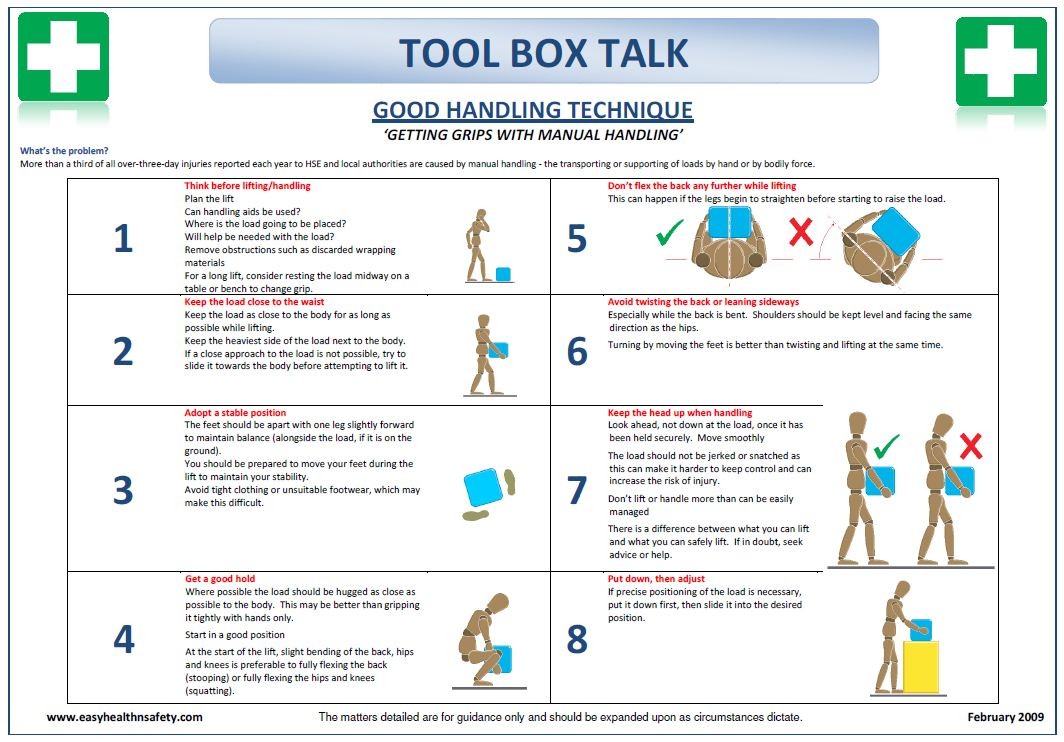
A template is a starting point—not the final product. Customization turns a generic document into a relevant safety intervention.
3-Step Customization Process
- Add Site-Specific Details
- Insert photos from your site, name equipment models, and reference recent incidents. Example: “Last week, we had a near-miss during crane lifting on the east pad—today’s talk ties directly to that.”
- Localize Language and Roles
- Replace “operator” with “Bob from Rig Team 2” or “the night shift crew.” Personalization increases engagement.
- Update Controls and Procedures
- Ensure the talk reflects your current safety protocols. If your site uses a new lockout/tagout procedure, update the template accordingly.
Workflow Tip: Assign a rotating team member to customize the weekly talk. This builds ownership and spreads safety leadership.
Integrating Downloads into Your Safety Program
A downloaded talk is only as good as its delivery. Use these strategies to maximize impact:
1. Schedule Consistently Hold talks at the same time and place each week—ideally before work begins. Crews expect it, and tardiness drops.
2. Use the Right Format Printed PDFs work for remote sites. Digital forms (via apps like iAuditor or Frontline) allow real-time sign-offs and cloud storage.
3. Track Participation Maintain a master log of dates, topics, attendees, and signatures. This is critical for OSHA inspections and insurance reviews.
4. Rotate Topics Follow a 12-month plan covering all key hazards. Example rotation: - January: Cold stress - April: Confined space entry - August: Heat exhaustion - November: Holiday season fatigue
Real-World Use Case: A construction firm in Texas reduced hand injuries by 40% after running a 6-week series on glove use, powered by customized downloadable talks.
Avoiding Common Pitfalls with Downloaded Talks
Even high-quality tool box talks downloads can fail if misused. Watch for these red flags:
- Over-reliance on templates
- Never let a download replace situational awareness. If a new hazard emerges (e.g., damaged scaffolding), address it—even if it’s not on the weekly plan.
- One-size-fits-all delivery
- A talk for electricians shouldn’t be read verbatim to welders. Adjust terminology and examples.
- No follow-up
- Did the crew understand? Did behavior change? Use quick quizzes or spot checks to verify retention.
- Poor documentation
- A talk without signatures is like a vote without a ballot. Always complete and file the record.
Insight: The best safety leaders don’t just download—they adapt, deliver, and verify.
Building a Sustainable Toolbox Talk System
The goal isn’t just to check a compliance box—it’s to create a culture where safety is discussed daily. Start with downloads, but evolve toward ownership.
Create a master folder with: - Monthly topic calendar - Customized templates - Attendance logs - Incident links (e.g., “Talk #14 tied to near-miss on 3/12”)
Share access with supervisors and rotate responsibility. Over time, your team will generate original content—using downloads only as a backup.
Actionable Step: This week, download a template on fall protection. Add a photo from your site, insert a recent observation, and run the talk with your crew. Collect signatures and file the record.
Frequently Asked Questions
Where can I get free tool box talks download in PDF? OSHA.gov, SafetyCulture, and Creative Safety Supply offer free, printable PDFs on common safety topics.
Are tool box talk templates OSHA-compliant? Templates based on OSHA standards are compliant in content, but delivery and documentation determine full compliance.
How long should a tool box talk last? Aim for 5 to 15 minutes—long enough to cover the hazard, short enough to maintain attention.
Can I customize downloaded tool box talks? Yes—and you should. Replace generic examples with site-specific risks and controls.
Do tool box talks prevent accidents? When delivered consistently and tailored to real hazards, they reduce incidents by reinforcing awareness and procedures.
Should every worker sign the tool box talk sheet? Yes. Signatures confirm attendance and understanding, and are required during regulatory audits.
How often should tool box talks be held? Weekly is ideal. High-risk sites may require twice-weekly or pre-task talks.
FAQ
What should you look for in Tool Box Talks Download: Free Templates and Best Practices? Focus on relevance, practical value, and how well the solution matches real user intent.
Is Tool Box Talks Download: Free Templates and Best Practices suitable for beginners? That depends on the workflow, but a clear step-by-step approach usually makes it easier to start.
How do you compare options around Tool Box Talks Download: Free Templates and Best Practices? Compare features, trust signals, limitations, pricing, and ease of implementation.
What mistakes should you avoid? Avoid generic choices, weak validation, and decisions based only on marketing claims.
What is the next best step? Shortlist the most relevant options, validate them quickly, and refine from real-world results.